
Within two weeks, have access to the top 1% of offshore IT talent. Provide adaptable content management and retrieval options from almost anywhere.
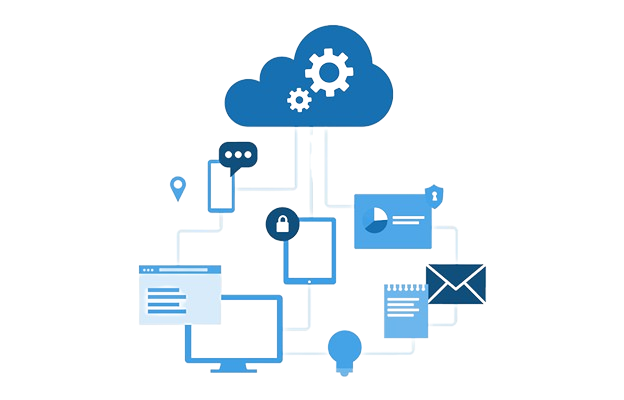


Businesses can benefit from scalability and efficiency in cloud-native settings. Collaboration may be improved and processes can be optimized with custom cloud application development. To create unique cloud solutions, our specialists make use of cloud platforms and technologies. These consist of Amazon S3 for scalable object storage, Kubernetes for container orchestration, AWS Lambda for serverless computing, and AWS Identity and Access Management (IAM) for encryption and access control.
Existing infrastructure and apps are moved to cloud platforms like AWS, Azure, and Google Cloud through cloud migration. This enables companies to adopt an IT system that is more adaptable and scalable. We evaluate your current systems and migrate workloads to enable you to fully utilize these cloud platforms. AWS Database Migration Service, AWS Snowball, and AWS Server Migration Service migrate databases automatically, while AWS Migration Hub centralizes tracking. Additionally, we employ programs like CloudEndure to guarantee a safe and easy transfer procedure.
Modern organizations are built on cloud infrastructure, which serves as the basis for adaptable and effective IT operations. Making the most of cloud resources, guaranteeing security, and optimizing the performance of cloud apps all depend on infrastructure management. We automate resource management with tools like Google Cloud Deployment Manager and AWS CloudFormation for infrastructure as code (IaC). We also make use of cloud-native management platforms, such as Google Cloud Monitoring, Azure Monitor, and AWS CloudWatch.
Enabling consumers to access cloud apps via the internet requires cloud deployment. Additionally, it makes cloud infrastructures more scalable. Our developers use solutions such as Google App Engine for building and deploying applications on Google Cloud, Azure App Service for smooth deployment on Azure, and AWS Elastic Beanstalk for quick application deployment and scalability. We also put continuous deployment and integration (CI/CD) pipelines into practice.
Cloud-based applications' continued dependability, security, and efficiency are guaranteed by cloud support and maintenance. To optimize cloud investments, firms must prioritize proactive management and prompt issue response. To assist cloud operations, we use performance-monitoring tools such as AWS CloudWatch, Azure Monitor, and Google Cloud Monitoring. We also use tools like Google Cloud Operations Suite, Azure Automation, and AWS Systems Manager to automate management.
Collaboration and communication between different software systems and applications are made possible through software integration. Integration makes ensuring that data flows smoothly, enabling businesses to take full use of their technological stack. With the help of integration platforms like MuleSoft, Apache Camel, and Dell Boomi, we link and synchronize software applications. By putting policies in place like OAuth for safe authentication and data encryption, we also give top priority to the security of data while it is in transit.
You may implement scalable and safe cloud applications with our adaptable engagement methods and cloud-based solution knowledge. Whether you're searching for end-to-end software outsourcing, staff augmentation, or dedicated teams, we provide engagement models that adjust to different project requirements.
Among IT talent, our cloud developers rank in the top 1%. We've placed a high priority on a methodical hiring procedure ever since we started to put together groups of incredibly talented and competent professionals. Our specialists are knowledgeable on serverless computing on cloud platforms like AWS, Azure, and Google Cloud, as well as cloud application technologies like Kubernetes and Docker.
By utilizing cutting-edge technologies like AWS Identity and Access Management (IAM), Azure Active Directory, and Google Cloud Identity and Access Management, we guarantee data safety and system integrity (IAM). Over the course of more than ten years, our dedication to security has allowed us to establish ourselves as a reliable partner for cloud applications by protecting sensitive data and fostering customer confidence.
Explore how leading companies harness the power of data science to drive innovation and achieve remarkable results. From American Express’s advanced fraud prevention models to UPS’s optimized global logistics operations, and Google’s breakthrough in cancer detection, these case studies demonstrate the transformative impact of data science across various industries. Delve into the detailed examples of how data-driven strategies enhance operational efficiency, personalize customer experiences, and revolutionize business practices.
Understanding of Service Models
Learn everything there is to know about the different cloud service models so you can select the best one.
Solutions That Scale
Consider scalability when designing apps so that they can easily accommodate rising demand.
Adoption of Microservices
Adopt a microservices architecture to improve development speed and flexibility.
Prioritize security
Prioritize security above all else when designing the application.
Redundancy and Resilience
Make sure redundancy and resilience are incorporated into the architecture to allow for graceful failure handling.
Utilizing Cloud-Native
To take full use of the cloud environment, make use of cloud-native services.
API Highlight
For smooth integration and communication with other services, give careful consideration to API design.
Multiple Cloud and Hybrid Methodologies
For increased flexibility and risk reduction, take into account using hybrid and multi-cloud cloud systems.
Integration of DevOps
Use DevOps techniques to improve development and operations teamwork, productivity, and speed.
Mechanization
Whenever feasible, automate procedures to lower manual error rates and boost productivity.
Expense Reduction
Put your attention on resource optimization to control expenses well without sacrificing performance.
Compliance and Data Governance
Make sure that data security and privacy compliance standards are strictly followed, including data governance.
Constant Observation
Keep track of and log application activity on a regular basis to quickly identify and resolve problems.
Knowledge of Innovation
Keep up with the most recent advancements in cloud computing to ensure that the application is always enhanced and modernized.
Priority One: User Experience
User experience should always come first, and applications should be dependable, responsive, and easy to use.
1. Flexibility and Scalability
Scalability and flexibility are provided by cloud application development, allowing you to scale resources and adjust to shifting demands. Simplify procedures and make things more accessible without compromising security.
2. Resource optimization and cost-effectiveness
The necessity for large upfront investments in hardware and infrastructure is removed by cloud-based apps. Cloud computing systems such as AWS, Azure, and Google Cloud provide resources optimization capabilities to improve resource allocation, decrease downtime, and streamline operations.
3. Improved Accessibility and Cooperation
Through the provision of centralized, secure access to tools and data, cloud applications improve accessibility and cooperation. Members of the team can work together in real time, no matter where they are in the world. Cloud apps’ accessibility across a range of devices fosters better teamwork and communication, which boosts output and creativity.
The use cases for cloud apps are many and include everything from data storage and web application scaling to development and testing environments. They are especially helpful for companies looking to improve security and cooperation, simplify processes, and use affordable solutions in an effective infrastructure. Anyone can access and exchange data from the cloud since cloud-based solutions are decentralized.
Cloud computing has revolutionized the way businesses operate and handle data, becoming essential to many different industries. The following are a few sectors that use cloud computing:
In general, cloud services can be divided into four categories:
Three categories of cloud computing models exist:
The public cloud makes resources available to various businesses via the internet.
With a private cloud model, the cloud is fully dedicated to your company's needs and specifications.
To address their shortcomings, the public and private cloud models are combined to create the hybrid cloud.
Numerous advantages come with cloud computing, including increased agility, resource optimization, scalability, flexibility, accessibility, and disaster recovery.
Applications on the web and in the cloud perform similar tasks, but their structures differ. Although they conduct tasks on a local device, cloud-based applications function within a cloud environment. Only when you're uploading or downloading data from the app does an internet connection become necessary. On the other hand, web applications require a constant internet connection in order to function. This is due to the fact that while an app is operating, software is continuously downloaded from the internet. Put otherwise, web apps cannot function while you are offline, but cloud apps can.
Although cloud computing has numerous advantages, data privacy may be impacted. Recognizing and reducing the dangers related to cloud storage of sensitive data is essential. Make sure the service you select conforms with data regulations in your areas of operation, offers strong cloud security technologies, and applies user access limits and data encryption. Assess the systems they have in place for identifying cyberattacks and data breaches as well as for correcting issues before they get worse.
The way that companies handle IT and business operations is altered by cloud computing. Cost savings, increased effectiveness, security, scalability, adaptability, and disaster recovery systems are just a few advantages it provides.
Offering computer services digitally can be done through two main approaches: cloud computing and traditional web hosting. While traditional web hosting is less scalable, adaptable, and accessible, cloud computing offers greater flexibility and scalability. Physical hardware modifications are usually necessary to scale a traditional hosting strategy.
The process of shifting operations to a cloud environment is called cloud migration. This entails moving apps, IT procedures, and data from other cloud environments or physical hardware to the cloud.
When selecting a cloud app development business, there are a number of things to take into account, including the provider's track record and portfolio, experience in your industry, and primary areas of expertise. It's crucial to think about the specifications of your project and the kind of interaction model you require. Dedicated teams, staff augmentation, and end-to-end software outsourcing are the three engagement options we provide.