
A cost transparency framework for engineering leaders who think they’re saving money
📑 In This Article
The Problem: Your Math Is Wrong
I hear this at least once a month from CTOs. And almost every time, they’re wrong.
Not because offshore development can’t work—it absolutely can. But because the hourly rate they’re paying bears almost no resemblance to the actual cost of getting working software delivered.
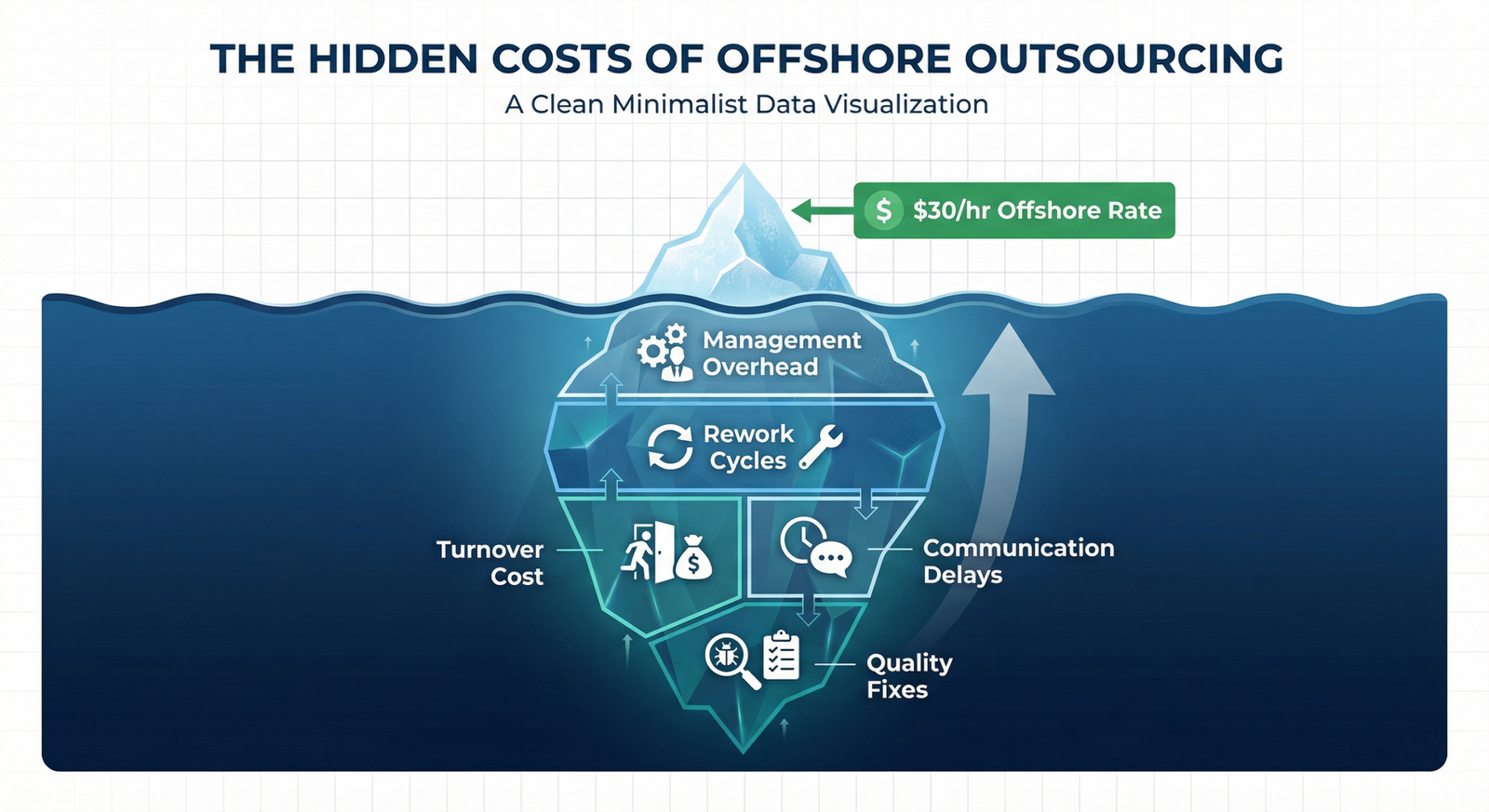
That $30/hr rate becomes $52/hr when you account for management overhead, rework, turnover, and communication delays.
The Hidden Tax: What’s Really Eating Your Budget
For a team with 10 offshore developers, here’s what we typically see:
| Hidden Cost Category | Annual Impact |
|---|---|
| Management overhead (2+ hrs/day coordination) | $45,000 |
| Rework cycles (40% of code needs revision) | $36,000 |
| Turnover (40% annual, 3-month ramp per replacement) | $32,000 |
| Communication delays (avg 8-hour response time) | $24,000 |
| Quality fixes in production | $15,000 |
| Total Hidden Tax | $152,000/year |
The hidden tax isn’t about whether offshore works—it’s about measuring the TRUE cost so you can optimize it.
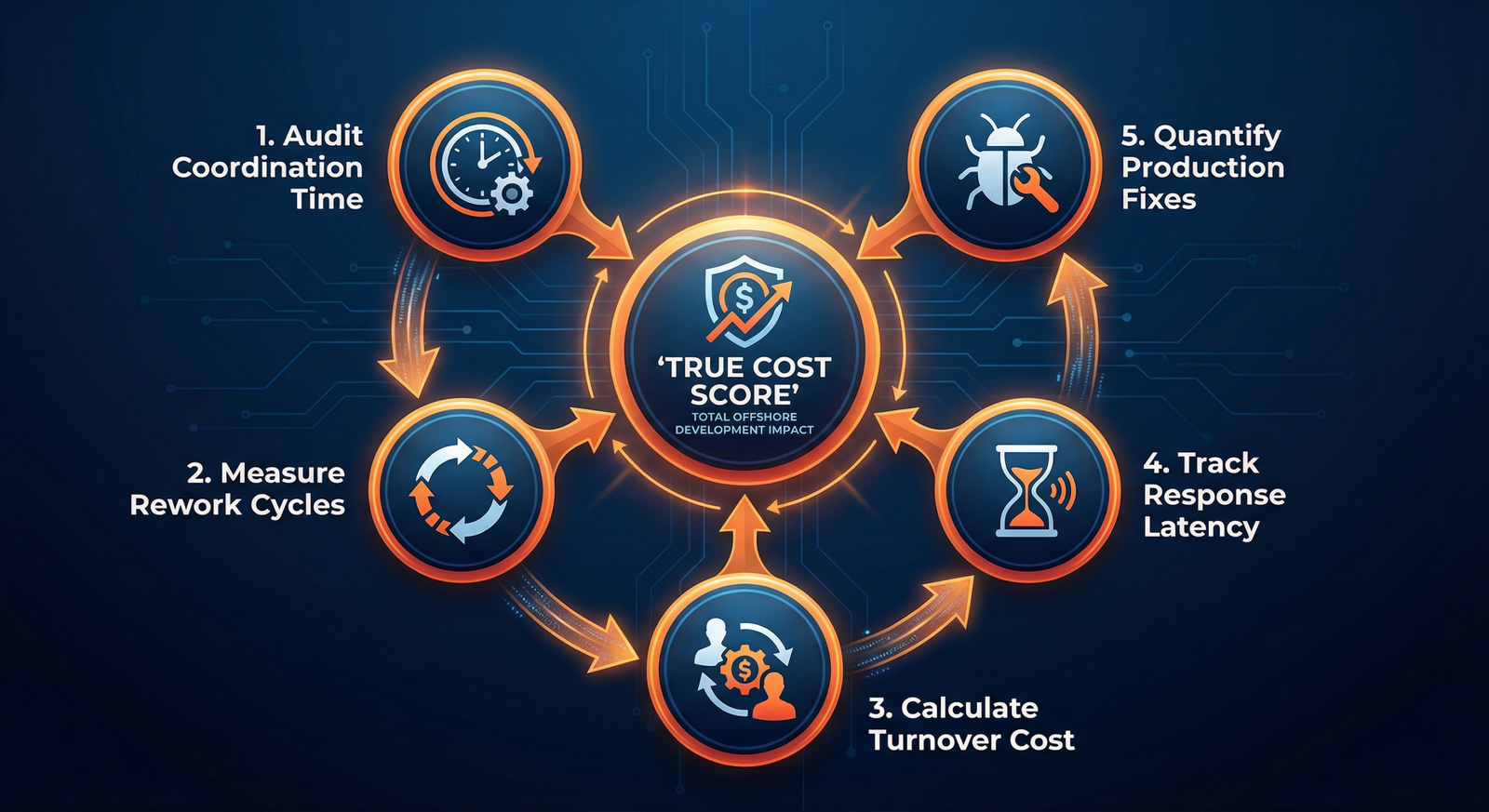
The Solution: A 5-Point True Cost Framework
The good news: you can measure and reduce this hidden tax. Here’s how.
1. Management Overhead Audit
Track how much time your senior engineers and managers spend on coordination, code reviews, and unblocking offshore team members. Multiply by their hourly rate.
2. Rework Rate Measurement
What percentage of pull requests require significant revision? What’s your defect escape rate? Each rework cycle costs 3-5x the original development time.
3. Turnover Cost Calculation
Average offshore turnover is 30-50% annually. Each replacement costs 3-6 months of ramp time. Factor this in.
4. Communication Delay Impact
Timezone gaps create 8-16 hour feedback loops. How many decisions are blocked waiting for responses?
5. Quality Cost Assessment
Track production incidents, hotfixes, and customer-reported bugs. What’s the cost to fix issues that should have been caught earlier?
How to Audit Your Current Setup
Week 1: Instrument your workflow. Track actual time spent on each category above.
Week 2: Calculate the true hourly rate using our formula:
True Hourly Rate = Base Rate + (Hidden Costs ÷ Billable Hours)
Week 3: Identify the biggest cost drivers and create an improvement plan.
What to Do Next
You have three options:
- Do It Yourself: Use the 5-point framework above to audit your team
- Get Guidance: Book a free cost analysis call with our team
- Full Support: Let GTCatalyst optimize your offshore operations
Calculate Your True Development Cost
Get a free analysis of your offshore team’s real cost per hour.
GTCatalyst specializes in optimizing offshore development operations. We help companies reduce hidden costs while maintaining or improving velocity.